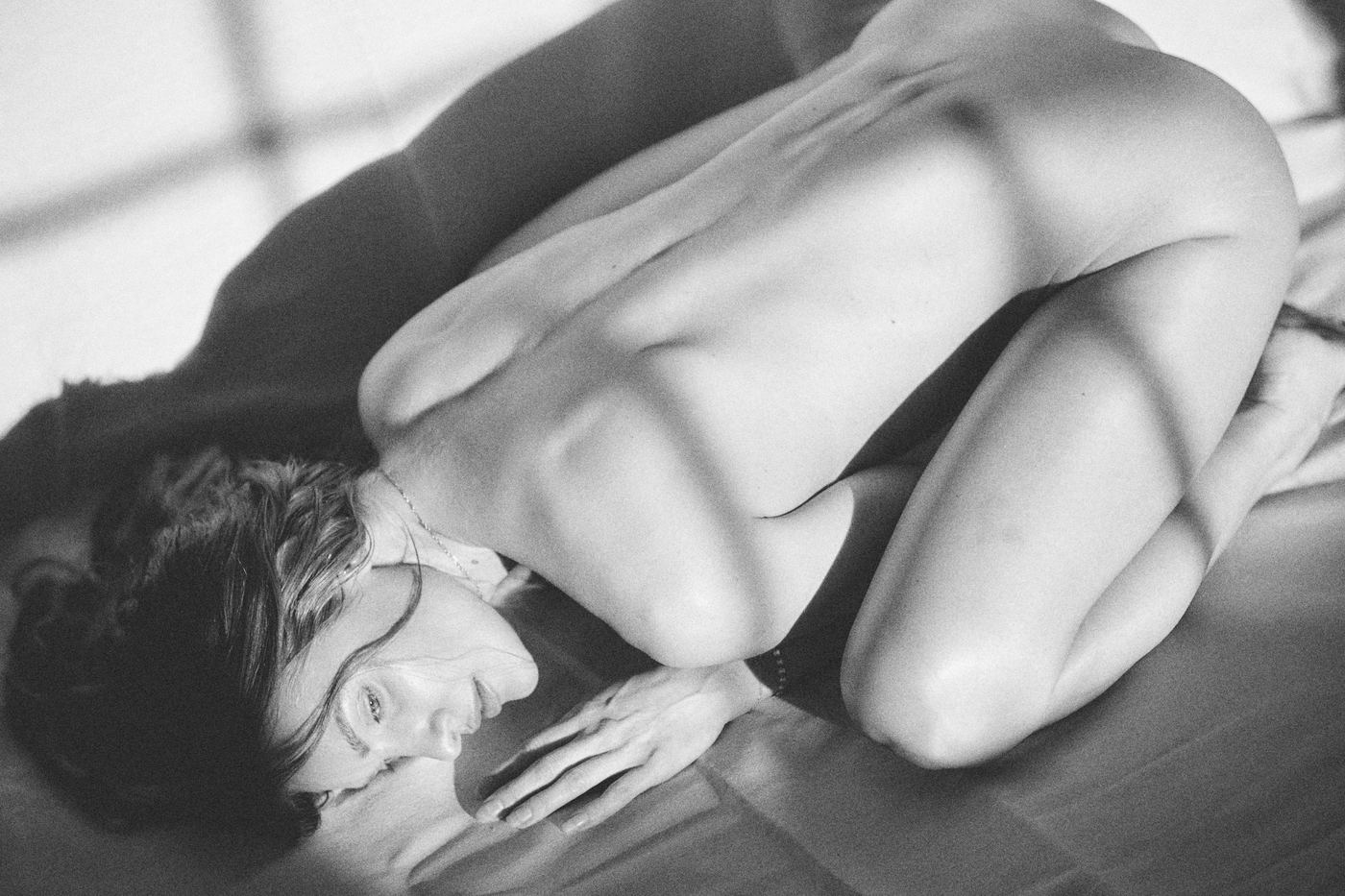
Before you book: the conversation
Every fine art session starts with a conversation, in person over coffee if you are in Salt Lake, on a video call if not. It is not a sales call. I want to know what drew you to the idea, what you imagine the photographs being for, and what you are nervous about. I will show you work, including some that is not on this site, and talk about how it was made. You will get a sense of whether you trust me. If you do not, you should not book, and I will say that.
We talk about your line. Implied, where nothing is actually visible. Partial. Full. You can start anywhere and change your mind on the day in either direction. Roughly a third of people go further than they planned once they see the first frames; roughly a third go softer; the rest stay where they said. All three outcomes are normal.
You also decide whether you want to bring someone. Some people do; more do not. Either is fine.
The week before
Everything in the general preparation article applies. A few extra things:
- Moisturise for a few days beforehand. Skin texture is the whole picture.
- Do not wear anything tight for three or four hours before the session. Elastic and sock marks take a long time to fade and are tedious to retouch.
- Do not do anything to your body hair that you would not normally do. The photographs should be of you as you are.
- Bring a robe and slippers, or I will have them. The studio is warm but not a sauna.
- Eat. Bring water.
The day: first hour
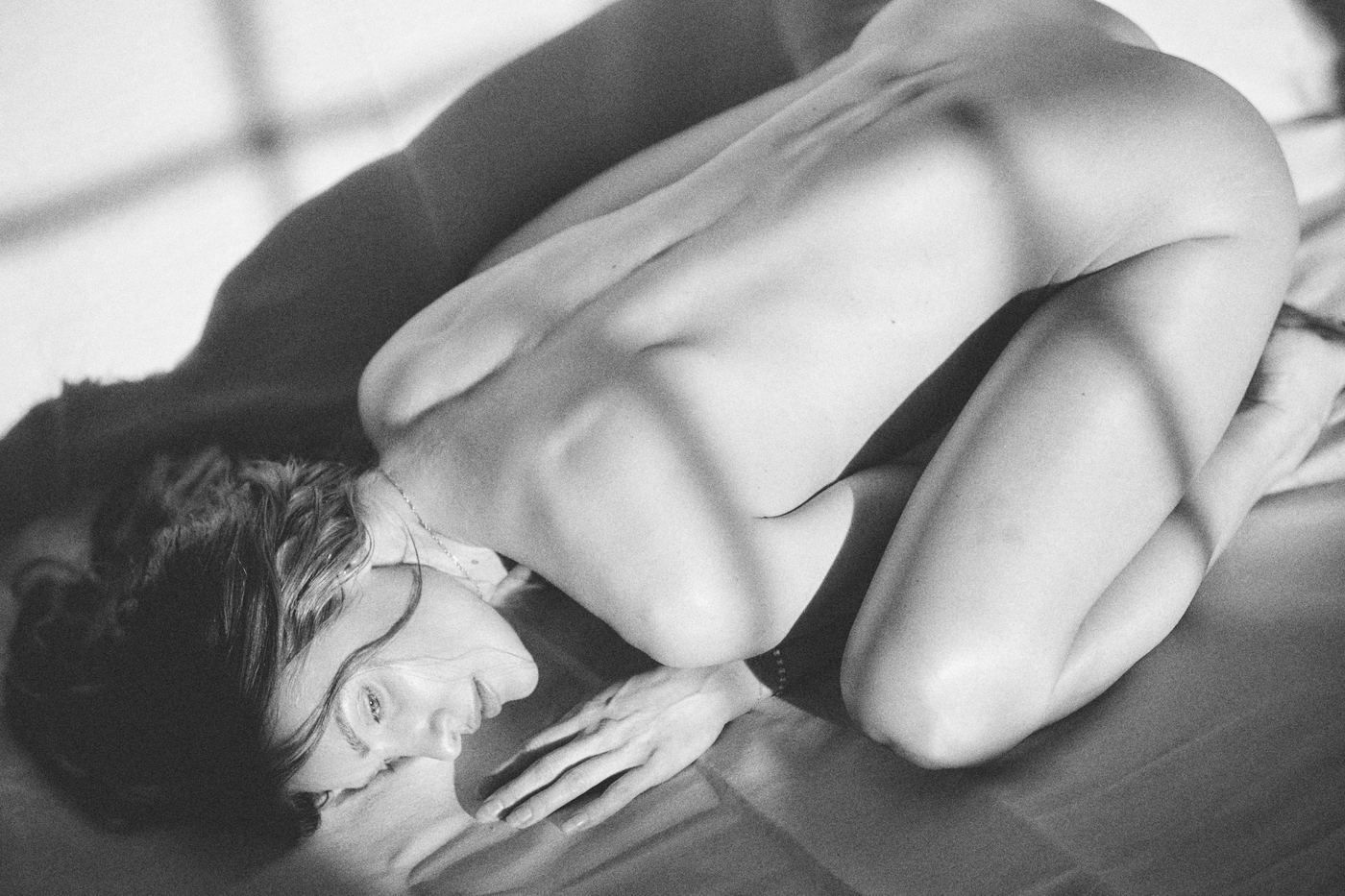
You arrive. The door is locked behind you. We have a coffee and talk, fully dressed, for twenty minutes or so while I set up light. This is not filler; it is when you stop being a client and start being a person in a room. I show you the set: usually a dark studio, one or two lights, a stool, some fabric. If we are on location, this happens in the car with the heater on while the sky lightens.
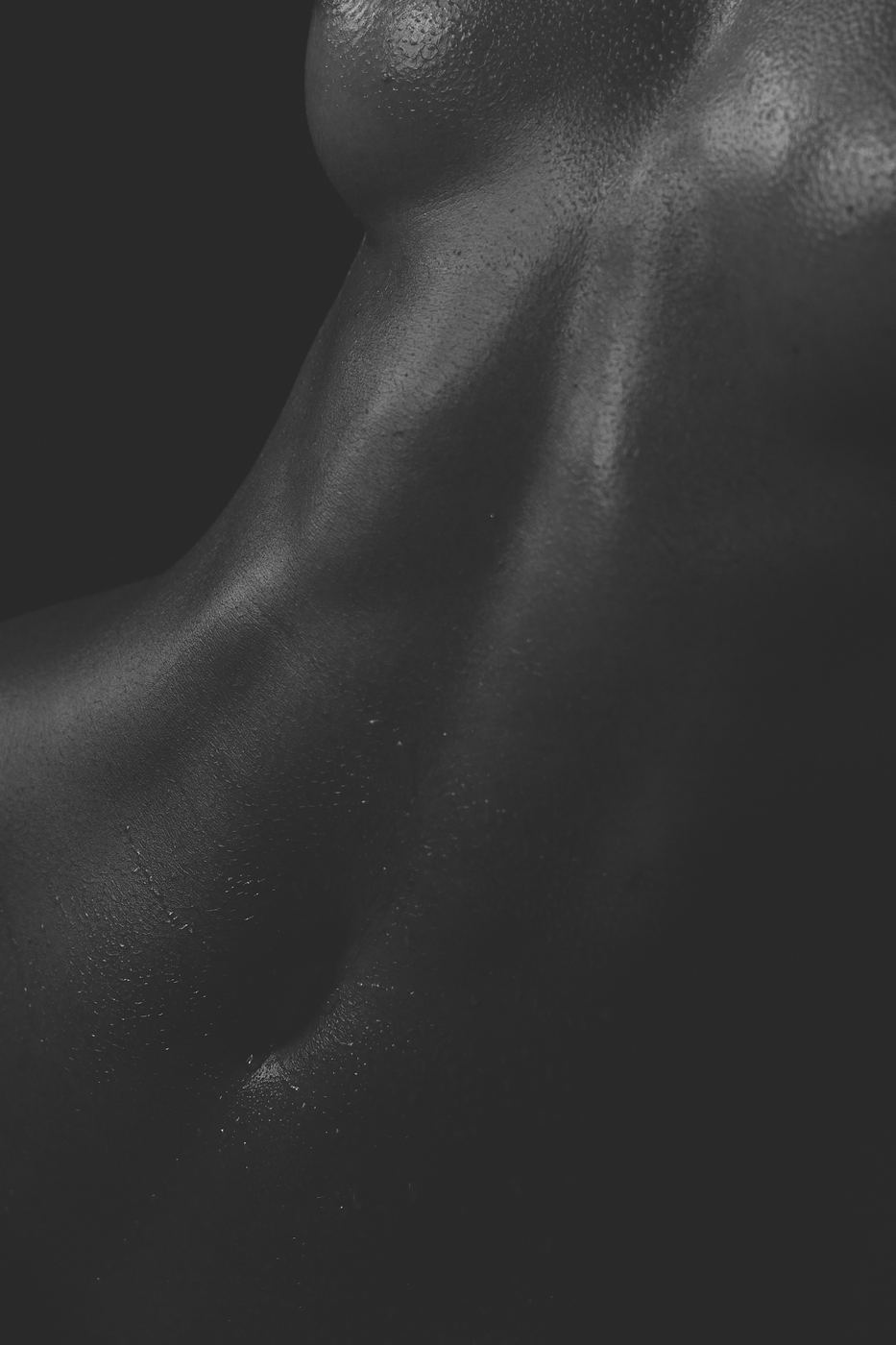
The first photographs are clothed. I light, you stand where I ask, I shoot a few frames, we look at them together on the camera or the screen. You see what the light is doing. You see that the photograph is about shape and shadow, not about exposure. This is the moment most people relax.
Second hour
Clothes come off in stages, at your pace, and always with the robe there for between setups. I direct constantly and specifically: turn your shoulders toward the light, drop your chin, weight on the back foot, breathe out, hold. You are never standing there wondering what to do with your hands. I talk the whole time. Silence is what makes people self-conscious.
I show you frames as we go. Not every one, but enough that you know what is being made. When something is working I tell you, and I mean it. When something is not I change the light or the pose, not you.
Third hour
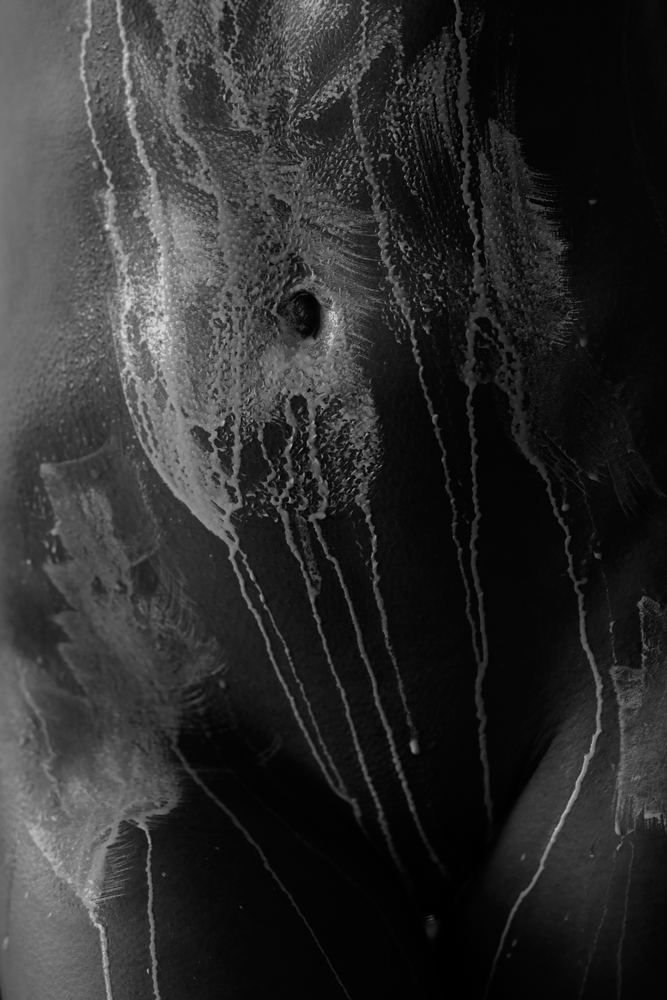
By now the awkwardness is gone and this is where the best frames come from. We try things: harder light, fabric, water if there is a bath or we are near the lake, movement. If you have brought an idea (many people do) this is where we shoot it. If you want to go further than we discussed, say so. If you want to stop or cover up, say so, and we do, with no discussion.
Sessions run three to four hours in total. The last half hour is usually quiet and the frames from it are usually my favourites.
After
You get dressed, we have another coffee, and I tell you honestly how I think it went. Within a week a private, password-protected gallery arrives with 40 to 80 proofs. Look at them alone first. Then, if you want, look at them with someone you trust. First reactions are unreliable; take two days.
You choose the images to be finished. I retouch by hand: dust, temporary blemishes if you want them gone, tonal work. Bodies stay the shape they are and skin keeps its texture. If you ask me to change your body I will talk you out of it, gently, because the marks are the point. Finished files arrive two to three weeks later in print and web resolution.
Privacy, again, because it matters
Nothing from your session is shown to anyone, ever, without your written permission for specific images. Not on this site, not on Instagram, not to another client as an example. Files live on encrypted drives. If you later want them deleted, I delete them and confirm in writing. Most galleries I have made have never been seen by anyone but their subject. The fine art page has the full terms.
Who books this
You may assume it is young models. Some are. Most are people in their thirties through sixties who have never been photographed like this and want one honest record. People after surgery, after weight loss, after a birth, after a diagnosis, after a divorce. Dancers. Athletes. Couples. Men, roughly a third of the time. If you are wondering whether you are the "type", there is no type, only light.
Locations
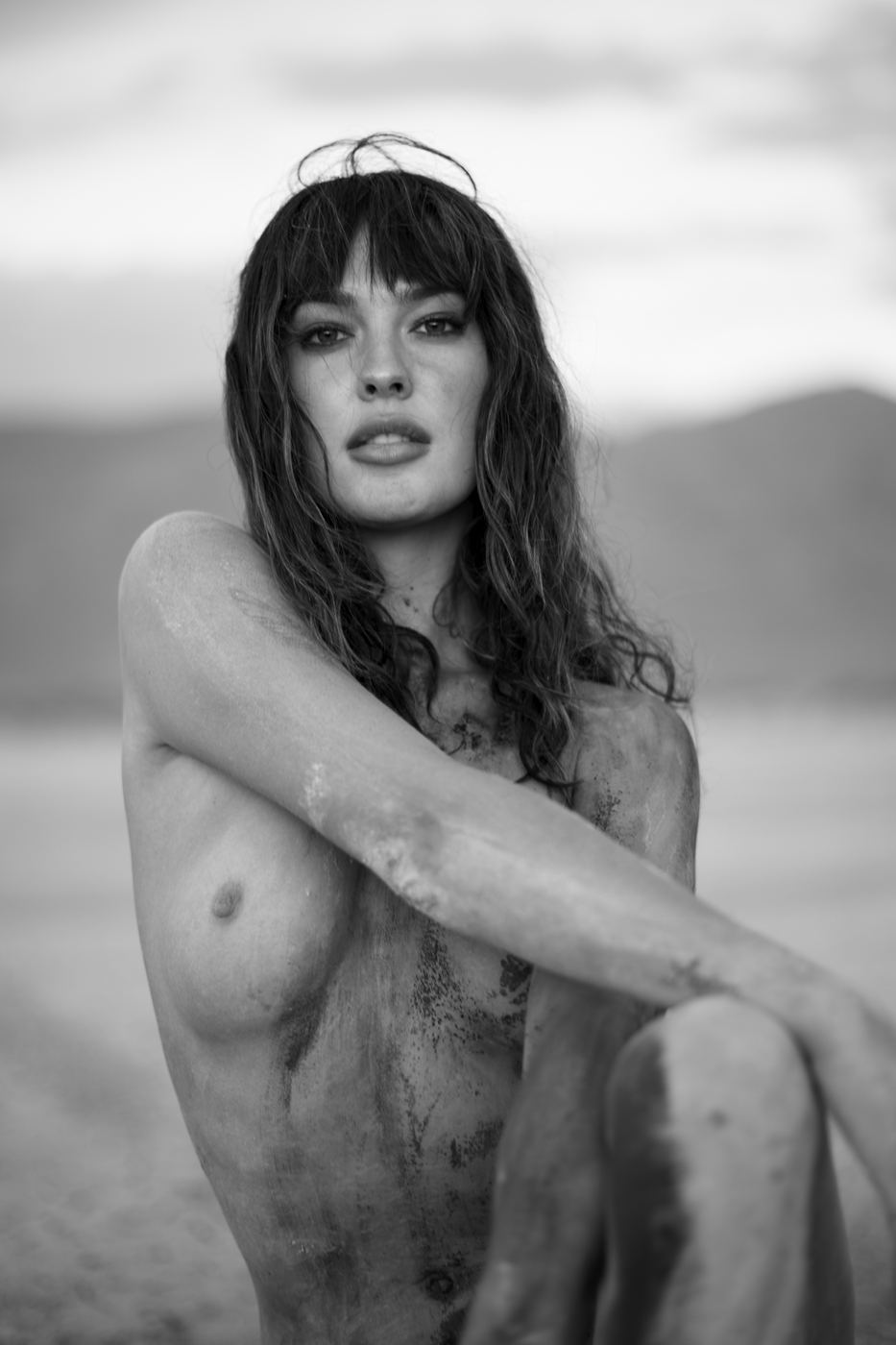
Most sessions are in the studio in Salt Lake City. Some are on location: the salt flats at dawn, the West Desert, southern Utah's red rock. Location sessions start early, involve driving and a robe in the car, and produce photographs that cannot be made anywhere else. We scout for privacy and I handle permits.
If you have read this far you have probably been thinking about it for a while. Email me the question you have not wanted to ask anyone. That is a fine place to start.
Questions I get asked
Three to four hours. Much of the first hour is clothed while we talk and I set light.
Yes, unless you bring one person, which you may. The door is locked and no one else is in the building.
Then we stop, you put the robe on, we have a coffee and decide together whether to continue, change direction or call it a day. Nobody has ever been pushed and nobody ever will be.
Blemishes and dust, yes. The shape of your body and the texture of your skin, no. If you want something changed we can talk about it, but the marks are usually the best part.
You. Anyone else only with your written permission for specific images. Most galleries are never seen by anyone but their subject.